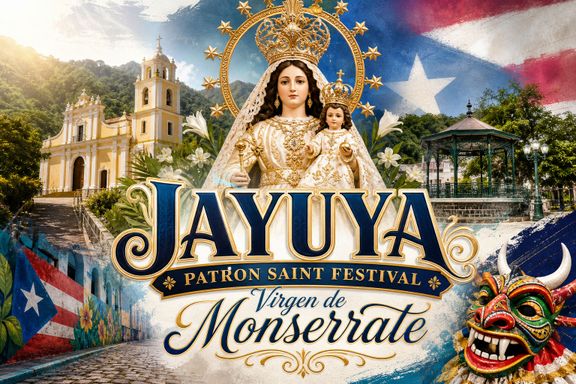
About this event
Deep in the Cordillera Central, where the mountain roads narrow and the coffee groves press close to the highway shoulders, the small highland municipality of Jayuya comes alive every September in honor of its patron saint. The Fiestas Patronales de Jayuya en Honor a la Virgen de la Monserrate 2026 run Saturday September 5 through Tuesday September 8, 2026, four days of live music, religious processions, mountain food, artisan markets, and the community warmth of a fiestas patronales that takes place not on a coastal tourist strip but in one of the most scenically beautiful and most culturally significant mountain towns on the entire island."The Jayuya fiestas are the most culturally significant of these five because of Jayuya's unique indigenous heritage context, its mountain setting, and its position as the island's most prominent Taíno cultural center."The Date: September 5 to 8, Built Around a Sacred Feast DayA Celebration Anchored in Spiritual TraditionThe Jayuya fiestas anchor on September 8, the feast day of Our Lady of Montserrat (Nuestra Señora de la Monserrate), the Marian apparition venerated throughout the Spanish-speaking world and honored as patron saint in at least five Puerto Rican municipalities: Jayuya, Aguas Buenas, Hormigueros, Moca, and Salinas. The fiestas begin several days before the feast day and culminate on September 8 with the most solemn religious ceremonies of the entire celebration.The 2025 edition ran September 5 to 8, 2025, and the 2026 edition is expected to follow the same four-day format ending on September 8. Confirm final 2026 programme details through the Municipio de Jayuya's official channels and enmipatiopr.com as September approaches.La Virgen de Monserrate: Jayuya's Spiritual AnchorThe Deep-Rooted Faith of a Mountain TownOur Lady of Montserrat is one of the most widely venerated Marian titles in the Spanish Catholic tradition, originating from the Black Madonna enshrined at the Monastery of Montserrat in Catalonia, Spain, whose dark-complexioned statue has been a pilgrimage destination since the 12th century. The Spanish colonial church brought devotion to La Virgen de Monserrate to Puerto Rico in the 16th and 17th centuries, where it took root most deeply in the mountain municipalities whose landscape of dramatic peaks and forested ridges echoed the Catalan mountain setting of the original shrine.In Jayuya, the veneration of the Virgen de Monserrate is inseparable from the town's identity. A particularly beloved local legend tells that a devotee named González was attacked by a bull and invoked the Virgin's name. Immediately the beast fell, its legs broken and its forehead touching the ground as if in prayer — a miracle that deepened the community's faith in her protection and sealed her place as Jayuya's spiritual guardian.The September 8 feast day is the most religiously significant moment of Jayuya's entire year, observed with:Solemn Mass at Jayuya's parish church in the town centerProcession carrying the image of La Virgen de Monserrate through the streets of Jayuya in the evening, with the mountain community lining the route in a display of collective faith that connects the living to generations of Jayuyanos who walked the same streets in the same procession before themOfferings and devotional prayers at the church altarSpecial religious programming across all four festival days that frames the cultural celebrations within the spiritual context that gives the fiestas their deeper meaningThe Two Venues: Sports Complex and Public PlazaWhere Tradition Meets CelebrationThe Jayuya fiestas use two distinct venues that together cover the full range of festival programming:Filiberto García Sports Complex — Main StageThe Heartbeat of Musical PerformancesThe Complejo Deportivo Filiberto García hosts the main stage performances, providing the open-air space needed for the large crowds that the evening concert programme draws from across the central region. This is where the headline musical acts perform each night, with the mountain air and the surrounding Cordillera Central ridgeline as the backdrop for concerts that run from the early evening into the late-night hours.The sports complex format gives the concert programme a festival-grounds atmosphere distinct from the intimate plaza setting of smaller municipal fiestas, and the combination of the two venues means visitors can move between the concert energy of the sports complex and the community warmth of the plaza food and craft market depending on what they are looking for at any given moment.Jayuya Public Plaza — Community HeartThe Social and Culinary CenterThe Plaza Pública de Jayuya is the social and culinary center of the fiestas, hosting:Kioskos serving Jayuya's mountain food tradition across all four daysArtisan stalls from local and island-wide craft vendorsFood vendors in the full Puerto Rican festival street food formatGames and amusement rides (machinas) for families and childrenCultural exhibitions and community organization displaysThe plaza's position at the center of Jayuya's mountain town grid gives the festival its most intimate and most genuinely community-rooted atmosphere, where local families set up chairs and settle in for the evening in the way that Puerto Rican fiestas patronales have been doing since the Spanish colonial era.The Music Programme: Mountain Fiestas, Full LineupA Celebration of Puerto Rican SoundsThe Jayuya fiestas deliver live concerts by local and national Puerto Rican artists across all four days, organized by the Municipal Administration of Jayuya under Mayor Jorge "Georgie" González. The musical programme reflects the broad spectrum of Puerto Rican popular music:Salsa and tropical music from established Puerto Rican orchestras and soloists whose names appear consistently across the island's fiestas patronales circuitMerengue and cumbia representing the broader Latin popular music traditionBomba and plena performances that connect the festival's musical programme to the Afro-Puerto Rican folk traditions shared across the island's mountain and coastal communitiesJíbaro music and décima reflecting the mountain folk tradition most directly associated with the central highlands communities where Jayuya sits — the cuatro-driven sound of Puerto Rican country music that is heard most authentically in the mountain municipalities that gave birth to itFolkloric dance groups presenting traditional Puerto Rican dance forms in the cultural programming that runs alongside the concert scheduleThe 2026 specific artist lineup had not been announced at time of research. Follow the Municipio de Jayuya's Facebook page and enmipatiopr.com for the confirmed 2026 programme as September approaches.The Cultural Programme: Beyond the MusicA Rich Tapestry of Art and TraditionWhat distinguishes Jayuya's fiestas from a straightforward concert series is the depth of its cultural programming across all four days:Art exhibitions spotlighting local Jayuya artists working in painting, sculpture, photography, and mixed media, presented in the gallery spaces and outdoor exhibition areas of the festival groundsCultural workshops in traditional Puerto Rican craft and art forms, including demonstrations of techniques that connect to the Taíno indigenous heritage that Jayuya celebrates more directly than almost any other Puerto Rican municipalityCircus and variety shows that provide family entertainment programming in the late afternoon hours before the evening concerts beginFolkloric dance performances by groups from Jayuya and surrounding municipalities presenting the regional dance traditions of the central highlandsCommunity organization presentations that reflect the social fabric of Jayuya's mountain community across schools, cultural associations, and civic groupsJayuya: The Indigenous Capital of Puerto RicoA Town Steeped in Taíno HeritageJayuya (population approximately 15,000) occupies a unique position in Puerto Rican cultural identity that goes far beyond what its small size might suggest. The municipality sits at the geographic center of the island in the highest reaches of the Cordillera Central, surrounded by Puerto Rico's most dramatic mountain landscape, and it carries the name of Hayuya, a Taíno cacique (chief) who was one of the leaders of the Taíno Revolt of 1511, the first significant indigenous uprising against Spanish colonial rule in Puerto Rico.This indigenous heritage is the defining element of Jayuya's cultural identity and the reason the town hosts not one but two major annual cultural festivals: the September fiestas patronales honoring the Virgen de Monserrate and the Festival Nacional Indígena in November, Puerto Rico's most important annual celebration of Taíno culture and heritage.The November Festival Nacional IndígenaA Celebration of Taíno CultureHeld at the end of November each year, the Festival Nacional Indígena de Jayuya is Puerto Rico's primary annual event celebrating the island's Taíno indigenous roots:Taíno ceremonies and costume pageants presenting the spiritual traditions, dress, and cultural practices of the pre-Columbian Taíno civilizationParades of indigenous costumes through the streets of JayuyaArtisan demonstrations of Taíno craft techniques including pottery, basket weaving, and stone carving in the pre-Columbian traditionHot air balloon rides over the mountain landscape for panoramic views of the Cordillera Central that give visitors a perspective on the terrain that shaped Taíno life for thousands of years before European contactVisits to nearby coffee plantations that connect the Taíno agricultural legacy to the mountain coffee culture that replaced it and that today defines Jayuya's economic identityThe Festival Nacional Indígena makes Jayuya a two-trip destination in 2026: the September fiestas patronales for the community celebration of faith and music, and the November indigenous festival for the deepest engagement with the island's pre-Columbian heritage available anywhere in Puerto Rico.Mountain Food at the Jayuya FiestasA Culinary Journey Through the HighlandsThe food kioskos at the Jayuya fiestas reflect the mountain cooking tradition of the central highlands, which is distinctly different from the coastal Puerto Rican food experience most visitors know from San Juan and the beach communities:Lechón asado (wood-roasted whole pig): The central highlands are home to Puerto Rico's most celebrated lechón tradition, centered in the nearby Ruta del Lechón (Guavate) just south of Cayey. The festival kioskos serving slow-roasted pork from wood-fired pits are drawing on a cooking tradition that has been perfected in these mountains for generationsGandinga, mollejas, y empanadillas: The full range of Puerto Rican offal and fried street food that appears at every fiestas patronalesPasteles de masa: The banana leaf-wrapped masa and pork parcels, particularly satisfying in the cooler mountain air of Jayuya's September eveningsMofongo de montaña: Mountain-style mofongo with the pork and chicken preparations most associated with highland cookingFresh-brewed Jayuya coffee: Jayuya is one of Puerto Rico's premier coffee-growing municipalities and the local café tradition means that fresh-ground, locally roasted coffee is available throughout the festival in a quality not replicated at sea-level eventsTembleque, mampostiales, and dulces criollos: The traditional Puerto Rican sweets and candy tradition that appears at fiestas patronales in its most authentically homemade form in the smaller mountain municipalitiesJayuya in the Puerto Rico September Cultural CalendarA Month of Celebration and HeritageThe Jayuya fiestas sit within a broader September cultural moment across Puerto Rico: Feast DayMunicipalityPatron Saint September 8JayuyaNuestra Señora de la Monserrate September 8Aguas BuenasNuestra Señora de la Monserrate September 8HormiguerosNuestra Señora de la Monserrate September 8MocaNuestra Señora de la Monserrate September 8SalinasNuestra Señora de la Monserrate Five Puerto Rican municipalities share the same patron saint feast day on September 8, each celebrating their fiestas patronales on overlapping schedules. The Jayuya fiestas are the most culturally significant of these five because of Jayuya's unique indigenous heritage context, its mountain setting, and its position as the island's most prominent Taíno cultural center.Getting to JayuyaYour Journey to the Heart of the MountainsJayuya sits deep in the central mountain interior of Puerto Rico, with no direct expressway access — the mountain roads are the only way in:From San Juan: Approximately 1 hour 30 minutes to 2 hours via PR-52 (Luis A. Ferré Expressway) south to Ponce direction, then PR-10 north through Utuado toward Jayuya, or via PR-52 to Villalba and mountain roads north. The routes vary and all involve winding mountain roads after leaving the expresswayFrom Luis Muñoz Marín Airport (SJU): Approximately 1 hour 45 minutes to 2 hours by carFrom Ponce: Approximately 45 minutes to 1 hour north via PR-10 through the Cordillera, the most straightforward approach to Jayuya from any major Puerto Rico cityFrom Utuado: Approximately 20 to 30 minutes southeast via PR-111 and the connecting mountain roads, making Utuado the most practical accommodation base for visitors to the Jayuya fiestas who want a short drive in and outA rental car is absolutely required. Jayuya is not accessible by any practical public transit from San Juan or from any other major municipality. The mountain roads approaching Jayuya are among the most dramatic and most beautiful drives on the island, with views across the Cordillera Central that make the journey a meaningful part of the experience rather than merely a logistical necessity.Important: The mountain roads to Jayuya are narrow and winding. Drive carefully, leave extra time, and avoid driving the mountain routes after dark if you are unfamiliar with them.Where to Stay: The Best Base for the Jayuya FiestasFinding Your Home in the HighlandsJayuya's accommodation inventory is limited to small guesthouses and home rentals within the municipality itself. The most practical accommodation strategy for visiting the fiestas is to base yourself in a nearby larger municipality:Utuado: The largest nearby mountain municipality, approximately 20 to 30 minutes from Jayuya, with the Lago Dos Bocas reservoir, the Cueva Ventana natural cave overlook, and the most practical selection of accommodation in the central mountain region. The Parador La Casa Grande in Utuado is one of Puerto Rico's most beloved mountain paradores (country inns), with a jungle-hillside setting that is the most atmospheric accommodation option within reach of the Jayuya fiestasPonce: Puerto Rico's second city on the south coast, approximately 45 minutes to 1 hour from Jayuya, with the full range of urban hotel accommodation and the cultural attractions of the island's most architecturally preserved historic centerVacation rentals in Jayuya itself: A small number of vacation rental homes in Jayuya and the surrounding mountain communities provide the most direct base for the fiestas, bookable through the standard short-term rental platformsCombining the Jayuya Fiestas with Nearby AttractionsExplore the Richness of the Central HighlandsThe fiestas patronales are the perfect anchor for a broader central highlands itinerary that takes in the most dramatically beautiful and most culturally significant interior Puerto Rico has to offer:Lago Dos Bocas (Utuado): The most scenic mountain reservoir in Puerto Rico, where a government ferry crosses the still lake to small waterfront restaurants serving fresh fried fish with tostones and mountain views. Approximately 25 minutes from JayuyaRío Camuy Cave Park: One of the Western Hemisphere's largest cave systems, approximately 45 minutes north of Jayuya near Hatillo. The guided tours through the enormous limestone caverns and sinkholes are one of Puerto Rico's most extraordinary natural experiencesToro Negro State Forest: Puerto Rico's largest forest reserve, approximately 30 minutes southeast of Jayuya, with hiking trails through the island's highest peaks including Cerro de Punta (1,338 meters), the highest point in Puerto RicoHacienda Gripinas: Puerto Rico's most historic mountain coffee hacienda, located in Jayuya itself on PR-527, a colonial-era coffee plantation now operating as a parador (country inn) with guided walks through the working coffee groves. Visiting Hacienda Gripinas the morning of a fiestas day combines the agricultural heritage that gives Jayuya its mountain identity with the community celebration of the eveningJayuya's Taíno heritage sites: The municipal area contains several sites of Taíno archaeological significance including petroglyphs carved into the riverstone at the Río Saliente and the community museum dedicated to the pre-Columbian history of the regionPractical Tips for the Jayuya Fiestas Patronales 2026Maximize Your Festival ExperienceArrive early for evening concerts. The Filiberto García Sports Complex fills quickly for headline acts, particularly on Saturday September 5 and the feast day closing ceremonies on Tuesday September 8Dress in layers. Jayuya sits at high mountain altitude and September evenings in the Cordillera Central are noticeably cooler than the coast — a light jacket or layer for the late-evening concert is genuinely needed in a way it never is in San Juan or on the beachSeptember 8 is the feast day: The most solemn and most moving day of the fiestas. Attend the Mass and evening procession for La Virgen de Monserrate for the most spiritually and culturally complete experience of what the celebration is actually aboutBring cash. Mountain festival kioskos, artisan stalls, and small vendors in the central highlands generally prefer cash over card paymentFuel up before leaving the expressway. Gas stations thin out dramatically on the mountain roads approaching Jayuya. Fill your tank in Utuado, Ponce, or at the last expressway exit before you turn into the mountainsBook accommodation in advance. The limited mountain accommodation options around Jayuya fill during the fiestas. Hacienda Gripinas parador in Jayuya and Parador La Casa Grande in Utuado are the most sought-after stays and book out months ahead for the fiestas weekendFrequently Asked QuestionsThe Things People Always Want to KnowWhen are the Fiestas Patronales de Jayuya 2026?Saturday September 5 through Tuesday September 8, 2026.Who is Jayuya's patron saint?Nuestra Señora de la Monserrate (Our Lady of Montserrat), feast day September 8.Where are the events held?The Filiberto García Sports Complex (main stage concerts) and the Plaza Pública de Jayuya (kioskos, artisans, rides, food).Is admission free?Yes. Fiestas patronales are free public community celebrations.How far is Jayuya from San Juan?Approximately 1 hour 30 minutes to 2 hours by car.Do I need a car?Yes, absolutely. A rental car is required. Jayuya is not accessible by public transit.What other major event does Jayuya host?The Festival Nacional Indígena, held in late November, celebrating Taíno indigenous heritage with ceremonies, costume pageants, and hot air balloon rides.Verified Information at a GlanceEvent Name: Fiestas Patronales de Jayuya en Honor a la Virgen de la Monserrate2026 Dates: Saturday September 5 to Tuesday September 8, 2026Patron Saint: Nuestra Señora de la Monserrate, feast day September 8Main Stage Venue: Complejo Deportivo Filiberto García, JayuyaCommunity Venue: Plaza Pública de JayuyaProgramme: Live concerts, religious Mass and procession, folkloric dance, art exhibitions, cultural workshops, circus shows, artisan market, food kioskos, amusement ridesOrganized By: Municipal Administration of Jayuya, Mayor Jorge "Georgie" GonzálezAdmission: FreeLocation: Jayuya, Cordillera Central, central mountain interior, Puerto RicoNearest Airport: Luis Muñoz Marín International Airport (SJU), San Juan — approximately 1 hour 45 minutes by carTransportation: Rental car required — mountain roads onlySeptember Weather: 22 to 27°C in the mountains, cooler than coast, light jacket recommended for eveningsAlso Known For: Taíno indigenous heritage, Festival Nacional Indígena (November), Hacienda Gripinas coffee plantation, Cerro de Punta (highest peak in Puerto Rico)Best For: Cultural travelers, Puerto Rican heritage visitors, religious pilgrimage travelers, mountain hiking enthusiasts, coffee tourism visitors, families, content creators covering authentic off-the-beaten-path Puerto Rico, Taíno history and indigenous culture travelers```